A Stop in Civita di Bagnoregio
The dying city. An ancient Etruscan borgo perched on a plateau of crumbling tufa rock, connected to the world by a single pedestrian bridge — one of the most extraordinary sights in Italy.
📍 Unique Attraction
⏱ 2 Hours Stop
🚗 Private Chauffeur
✅ NCC Licensed since 2004
Why Stop in Civita di Bagnoregio
The Dying City Above the Clouds
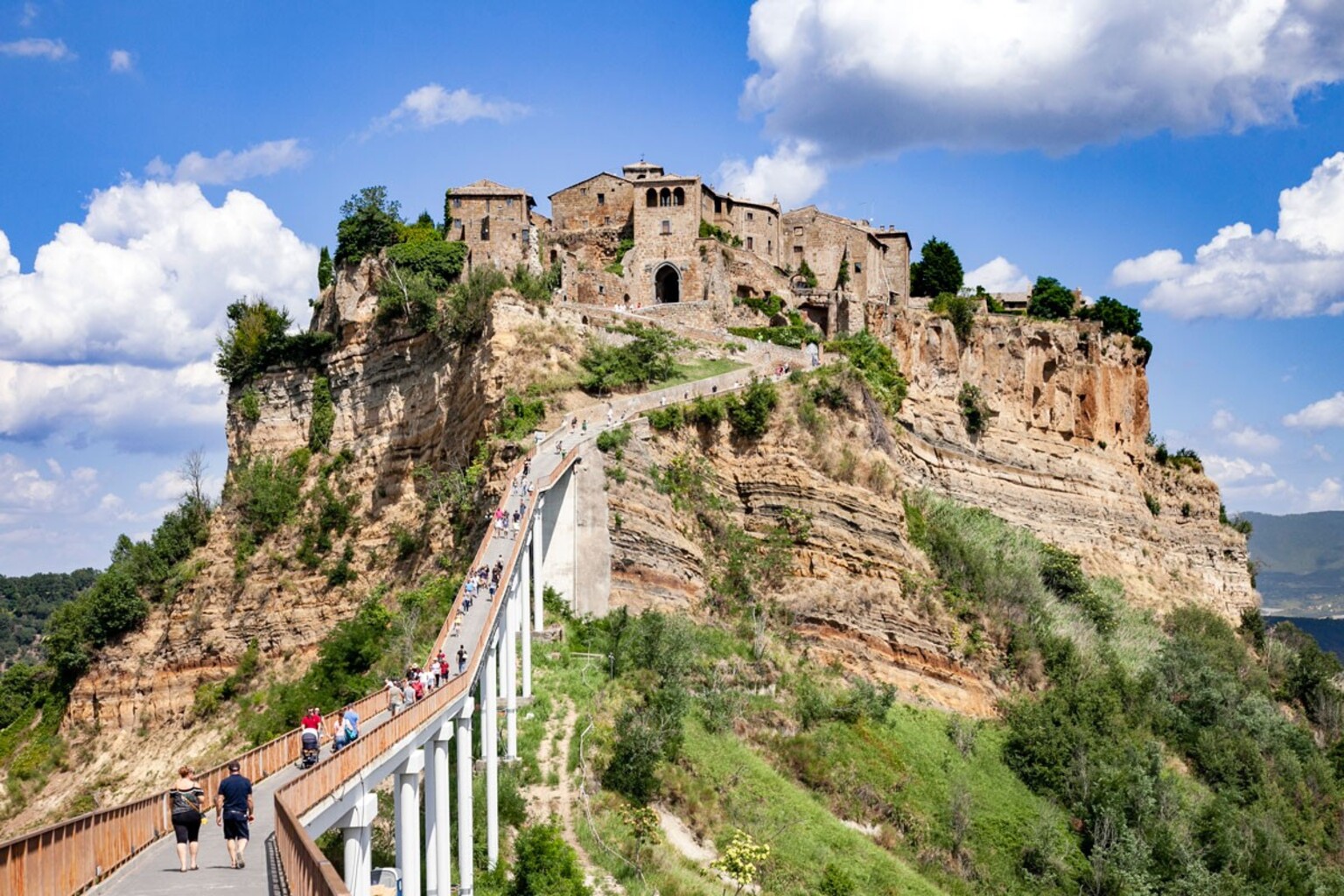
Civita di Bagnoregio is one of the most extraordinary places in Italy — and one of the least visited by travellers who do not know to look for it. Founded by the Etruscans over 2,500 years ago on a plateau of volcanic tufa rock, the village is slowly being reclaimed by the Valle dei Calanchi below. The soft rock erodes with every rainstorm, the cliffs retreat, and the village grows smaller with each passing century. It is known in Italy as "la città che muore" — the dying city.
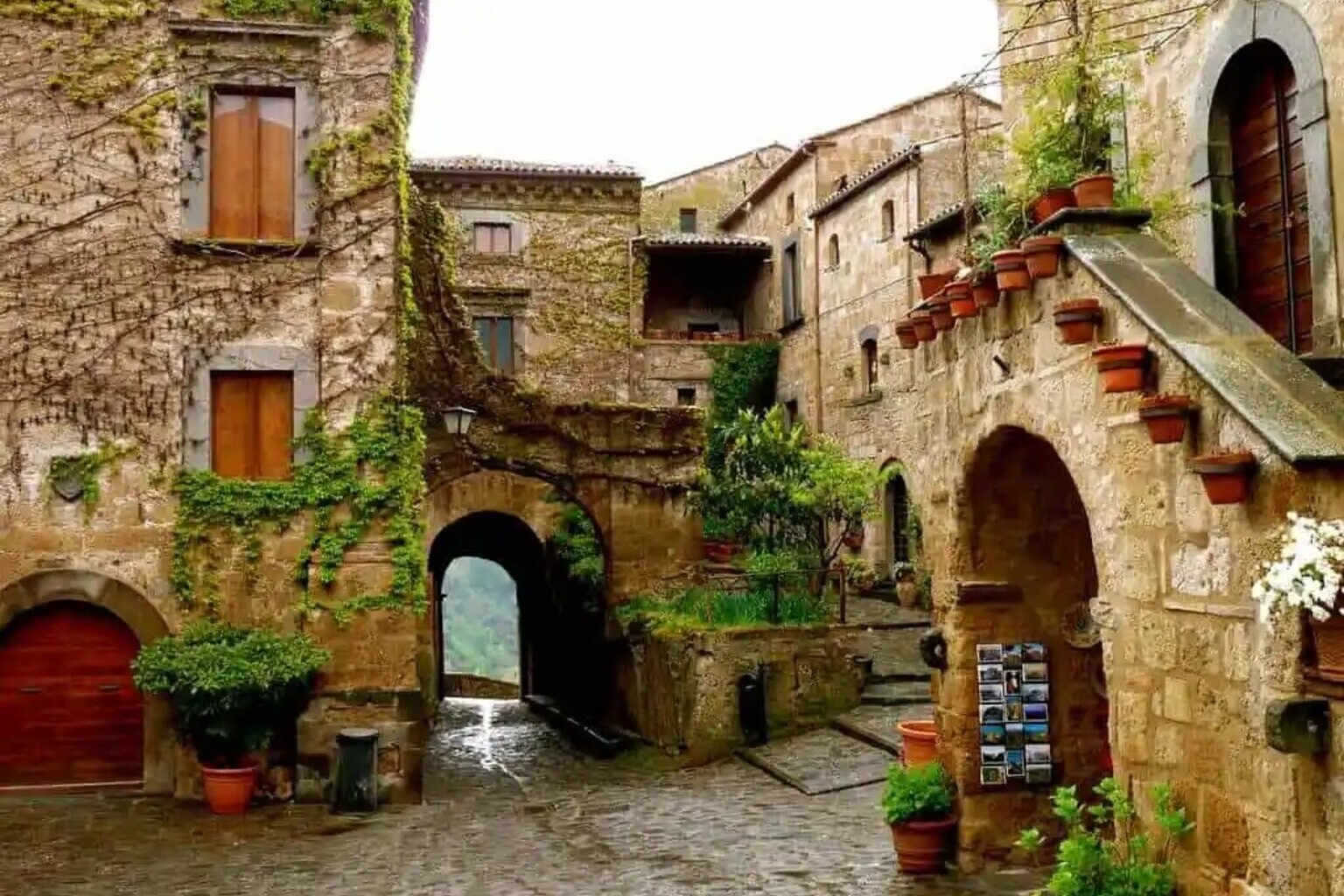
What remains is extraordinary. Arriving on foot across the single pedestrian bridge — the only connection to the outside world — is one of the most cinematic approaches to any village in Europe. Inside the ancient walls, time seems to have stopped: cobblestone streets, stone archways, terracotta pots full of geraniums and a handful of residents who have chosen to remain. It is a place that demands quiet contemplation rather than hurried sightseeing.
A two-hour stop is ideal. Cross the bridge, explore the village at your own pace and stop for lunch at one of the small restaurants overlooking the valley. The views from the edge of the plateau — across the calanchi ravines and toward the surrounding hills of Lazio and Umbria — are unlike anything else in central Italy.
🎟 Tickets & Info
Official Civita Website
Everything you need to plan your visit — entry tickets, opening hours, access rules and the latest news about the village. Entry to Civita requires a ticket purchased before crossing the bridge.
Buy Tickets
🍽 Eat, See & Do
Civita di Bagnoregio Guide
A comprehensive guide to what to see, where to eat and what to do in and around Civita di Bagnoregio — including restaurants, local products and nearby attractions in the Valle dei Calanchi.
Explore the Guide
2 hrsRecommended Stop
2500+Years of History
1Bridge to Cross
24/7Available Year-Round
Transfer Routes
Journeys Through Civita di Bagnoregio
Civita di Bagnoregio sits between Rome and central Tuscany, making it a natural — and unforgettable — stop on several long-distance transfers through central Italy.
Route 01
Rome → Florence with stop in Civita di Bagnoregio
Leaving Rome and heading north to Florence? Rather than driving straight up the motorway, break the journey at one of the most extraordinary sights in Italy. Civita di Bagnoregio is just off the A1 — a two-hour stop here turns a routine transfer into an experience that most visitors to Italy never have. Cross the bridge, explore the dying city and continue to Florence.
Rome
📍 Civita di Bagnoregio · 2 hrs
Florence
⏱ Total: approx. 5–6 hrs with stop
👥 Up to 6 pax · Mercedes Vito / V-Class
Route 02
Bologna → Rome with stop in Civita di Bagnoregio
Travelling from Bologna all the way south to Rome? The long drive down through Emilia-Romagna and Tuscany becomes genuinely rewarding with a stop at Civita di Bagnoregio. Roughly halfway between the two cities, the dying city offers a two-hour pause unlike anything else on the route — ancient, silent and utterly unlike the motorway Italy that surrounds it.
Bologna
📍 Civita di Bagnoregio · 2 hrs
Rome
⏱ Total: approx. 6–7 hrs with stop
👥 Up to 3 pax · Mercedes E-Class
Route 03
Florence → Rome with stop in Civita di Bagnoregio
The Florence to Rome transfer is one of the most travelled routes in Italy. Most people take the motorway and arrive in three hours without seeing anything. Add a stop at Civita di Bagnoregio and the journey becomes an experience in itself — cross the pedestrian bridge, explore the ancient village, have lunch overlooking the Valle dei Calanchi and arrive in Rome in the early evening.
Florence
📍 Civita di Bagnoregio · 2 hrs
Rome
⏱ Total: approx. 5–6 hrs with stop
👥 Up to 6 pax · Mercedes Vito / V-Class
Route 04
Siena → Rome with stop in Civita di Bagnoregio
Leaving the medieval hills of Siena and heading south to Rome? Civita di Bagnoregio sits naturally along the route through Lazio — a perfect opportunity to combine two of central Italy's most atmospheric places in a single journey. From Siena's Piazza del Campo to the dying city on its tufa plateau, this transfer covers some of the most dramatic landscape in the country.
Siena
📍 Civita di Bagnoregio · 2 hrs
Rome
⏱ Total: approx. 5–6 hrs with stop
👥 Up to 3 pax · Mercedes E-Class
What to See in Civita di Bagnoregio

Make the Most of Your Stop
Two hours is the perfect amount of time to experience Civita di Bagnoregio. Here is what we recommend to first-time visitors.
The Only Way In
The Pedestrian Bridge
⏱ 10 min walk · 🎟 Entry ticket required · 📸 Most iconic view
Ancient Streets
Inside the Village
⏱ 45–60 min · 🎟 Included with entry · 🍽 Local restaurants
Nearby — Orvieto
Pozzo di San Patrizio
⏱ 20 min from Civita · 🎟 Small fee · 🏛 16th century marvel
Ready to book your stop in Civita di Bagnoregio?
Contact us on WhatsApp for a fast reply, or use our instant price calculator to get your quote online.
Top cities
Explore
Our Fleet
Contact Us
✆
Phone / WhatsApp
+39 320 036 6785
✉
Email
info@expresslimo24.com
◎
Base
Montecatini Terme, Tuscany, Italy
✓
NCC Licence
n°1 & n°2 — Comune di Montecatini Terme